
3-Month Mechanical Design Engineering Internship

Practical Design Experience • Engineering Skills • Portfolio Development • Interview Readiness

Build practical Mechanical Design Engineering skills through a structured 3-month online internship designed for Mechanical Engineering students, fresh graduates, and early-career engineers who want to become confident in technical interviews and develop a professional engineering portfolio.

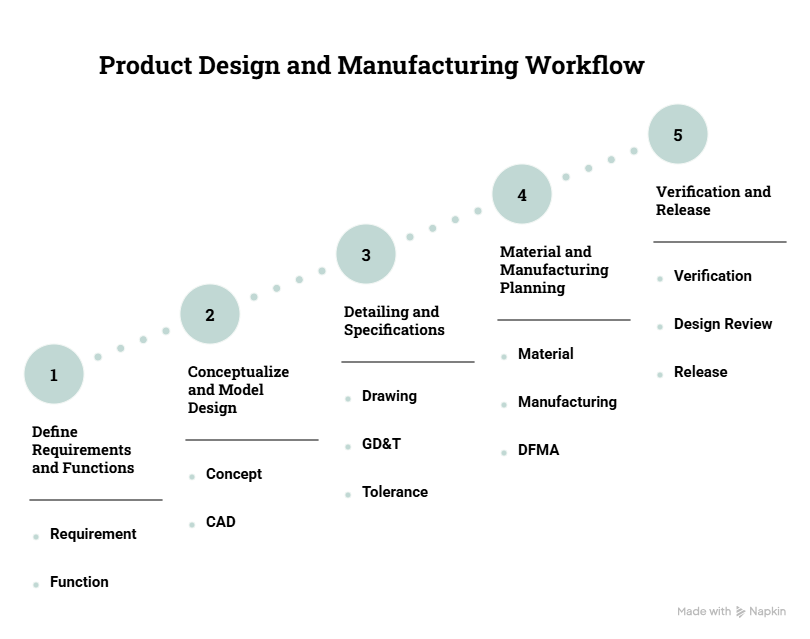
This internship is built around the real engineering workflow used in mechanical product development—from understanding requirements and creating designs to engineering drawings, GD&T/GPS, tolerance analysis, manufacturing considerations, design optimization, verification, documentation, and final technical presentation.

What You Will Experience

This is not designed as a conventional theory-based course.

Throughout the internship, you will work through engineering problems, design exercises, technical assignments, reviews, and a final portfolio project.

8-Week Rotational Engineering Internship

The first 8 weeks follow a rolling curriculum.

You can join the internship at the beginning of any week. Each weekly module is structured as an independent engineering topic, allowing new interns to enter the program without waiting for a new batch.

Topics include:

  • Engineering requirements
  • Functional requirements
  • Design inputs and outputs
  • Design constraints
  • Design intent
  • Concept development
  • Component and assembly design
  • Design reviews
  • Prototype development
  • Design verification
  • Engineering documentation
  • Design release

Understand how a mechanical design engineer approaches a new product or component.

Practical outcome: Learn to structure a mechanical design problem from requirement to solution.

Topics include:

  • Parametric modelling
  • Design intent
  • Part modelling
  • Assembly modelling
  • Engineering drawings
  • Drawing views
  • Sections and details
  • Dimensions
  • Drawing notes
  • BOM
  • Revision control
  • Engineering documentation

Develop the fundamentals required to convert engineering concepts into professional design documentation.

CAD exposure: SolidWorks, Siemens NX, CATIA V5 and Creo concepts.

Practical outcome: Understand how 3D models, assemblies and engineering drawings work together.

Topics include:

  • Datums
  • Datum reference frame
  • Feature control frames
  • Form controls
  • Orientation controls
  • Location controls
  • Profile
  • Runout
  • Basic dimensions
  • MMC
  • LMC
  • RFS
  • Functional dimensioning
  • Datum strategy

Develop practical understanding of functional geometric dimensioning and tolerancing.

Standards exposure: ASME Y14.5 and ISO GPS principles.

Practical outcome: Understand how to select and explain tolerances based on functional requirements.

Topics include:

  • Limits and fits
  • Clearance fits
  • Transition fits
  • Interference fits
  • Hole-basis system
  • Shaft-basis system
  • ISO 286
  • ISO 2768
  • Worst-case analysis
  • Statistical tolerance analysis
  • 1D stack-up
  • Interface analysis
  • Assembly variation

Learn how dimensional variation affects real assemblies.

Practical outcome: Perform and explain a basic tolerance stack-up for a mechanical assembly.

Topics include:

  • Material selection
  • Strength and stiffness
  • Corrosion
  • Temperature
  • Wear
  • Cost
  • Machining
  • Sheet metal
  • Casting
  • Injection molding
  • Assembly processes
  • Manufacturing limitations
  • Inspection considerations

Learn to design components with manufacturing in mind.

Practical outcome: Learn to justify material and manufacturing-process selection from engineering requirements.

Topics include:

  • Design for Manufacturing
  • Design for Assembly
  • Part-count reduction
  • Standardization
  • Fastener reduction
  • Assembly simplification
  • Manufacturing accessibility
  • Inspection accessibility
  • Cost reduction
  • Design optimization

Learn how engineers improve products for manufacturing, assembly, cost and reliability.

Practical outcome: Analyze an existing design and identify opportunities for simplification and optimization.

Topics include:

  • New Product Development
  • Prototype development
  • Design verification
  • Design review
  • Verification planning
  • Engineering changes
  • ECR / ECN / DCN
  • BOM management
  • Configuration management
  • Revision control
  • PLM concepts
  • DFMEA fundamentals

Understand how engineering designs progress toward a released product.

Practical outcome: Understand the engineering activities between initial design and product release.

Preparation includes:

  • Mechanical design questions
  • CAD questions
  • Drawing questions
  • GD&T questions
  • Tolerance questions
  • Manufacturing questions
  • DFMA questions
  • NPD questions
  • Design-verification questions
  • Engineering scenario questions
  • Technical project explanation
  • Cross-questioning

Convert your technical knowledge into interview-ready engineering communication.

You will practice answering not only “What?”, but also:

Why? → Why this method? → Why this tolerance? → Why this material? → How would you manufacture it? → How would you inspect it? → What would you change?

Practical outcome: Develop engineering reasoning and technical interview confidence.

After completing the 8-week rotational curriculum, you move into the Final Portfolio Project Phase.

Final 4-Week Portfolio Internship

You will select one of four project options provided as part of the internship.

The project is developed progressively over four weeks.

Week 9- Requirements & Concept

Project objective Engineering requirements Functional requirements Design assumptions Concept development Initial design

Week 10- CAD & Engineering Design

3D modelling Assembly development Engineering drawings Functional dimensions Datum strategy GD&T Fits and tolerances

Week 11 — Engineering Analysis & Optimization

Tolerance stack-up Material selection Manufacturing process DFMA Design optimization Verification planning BOM

Week 12 — Portfolio & Technical Presentation

Final design documentation Engineering decisions Design justification Portfolio preparation Project presentation Technical questioning Mock interview

Your Portfolio by the End of the Internship

Engineering Portfolio

You will develop a structured engineering portfolio containing practical design work, engineering documentation, and a final project designed to give you something concrete to discuss during technical interviews.

Requirements & Concept

✓ Project objective & requirements
✓ Engineering concepts

CAD & Design

3D CAD models
Assemblies
2D engineering drawings
GD&T / GPS
Datum strategy

Tolerancing & Materials

Fits and tolerances
Tolerance stack-up
Material selection

Manufacturing & Optimization

Manufacturing considerations
DFMA analysis
Design optimization
Verification approach

Documentation & Presentation

BOM / engineering documentation
Final project presentation

Internship Deliverables

At the end of the 3-month internship, you will have:

  1. Practical Mechanical Design Engineering exposure
  2. Weekly engineering assignments
  3. GD&T and tolerance exercises
  4. Manufacturing and DFMA exercises
  5. One completed portfolio project
  6. Technical project presentation
  7. Interview question preparation
  8. Mock technical interview
  9. Engineering portfolio material
  10. Internship Completion Certificate

Who Should Join?

This internship is suitable for:

  • Mechanical Engineering Students
  • Final-Year Students
  • Recent Mechanical Engineering Graduates
  • Freshers
  • Junior Mechanical Engineers
  • CAD / Design Engineering Aspirants
  • Engineers preparing for Mechanical Design interviews

You do not need to be an expert before joining.

The internship is designed to progressively develop your engineering
thinking and practical design knowledge.

What Makes This Internship Different?

Learn to Explain Your Engineering Decisions

Technical interviews often go beyond definitions.

Instead of simply asking:

  • “What is GD&T?”

Interviewers may ask:

  • “Why did you select this datum?”
  • “Why did you choose this tolerance?”
  • “How will this component be manufactured?”
  • “How will you verify the design?”
  • “What happens if the tolerance is too tight?”

This internship trains you to think, design, justify and communicate like a Mechanical Design Engineer.

Learn the Engineering Process — Not Just Software

CAD is only one part of mechanical design.

A professional engineer must understand:

Function + Design + Drawing + GD&T + Tolerance + Material + Manufacturing + DFMA + Verification

This internship brings these skills together into one structured engineering workflow.

Start Your Mechanical Design Engineering Journey

3 Months. 8-Week Rotational Curriculum. 4-Week Portfolio Project.

Learn → Apply → Analyze → Optimize → Present → Prepare

Limited-cost practical internship for Mechanical Engineering students and early-career engineers.

Fee: 🇮🇳  ₹5,000 /🌍 €45

100% Online | Rolling Enrollment | Internship Certificate