
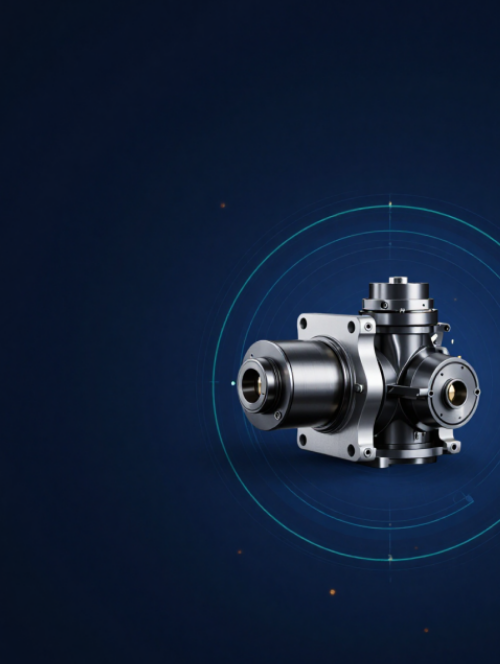
From concept and product design to engineering analysis, prototyping and validation, we provide end-to-end mechanical engineering support for new and existing products.
Our engineering capabilities help organizations develop, optimize, validate and improve mechanical products while considering functionality, manufacturability, reliability, cost and performance.
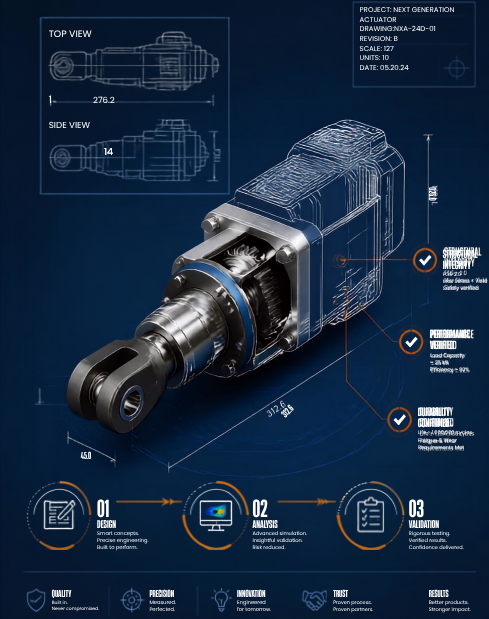
Mechanical product development requires more than creating a 3D model. Successful products must perform their intended function, withstand operating conditions, be manufacturable, cost-effective and reliable throughout their lifecycle.
Our mechanical engineering services bring together product design, CAD, engineering analysis, tolerance engineering, design optimization, prototyping and testing to support projects from early concept through production and product improvement.
We can support individual engineering activities or provide a broader engineering engagement based on your project requirements.
Transforming Requirements into Production-Ready Designs
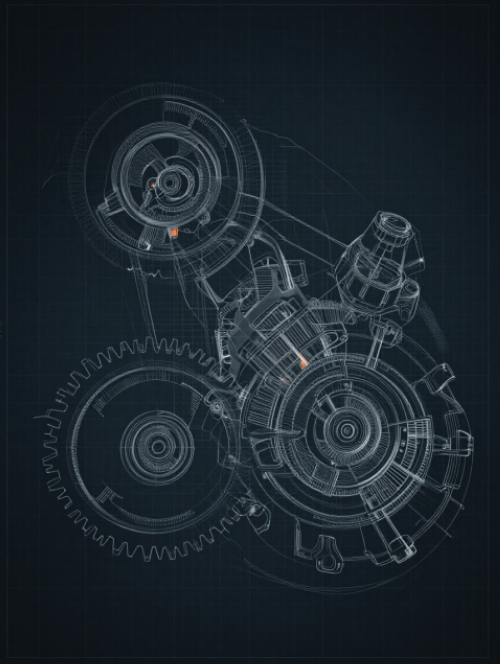
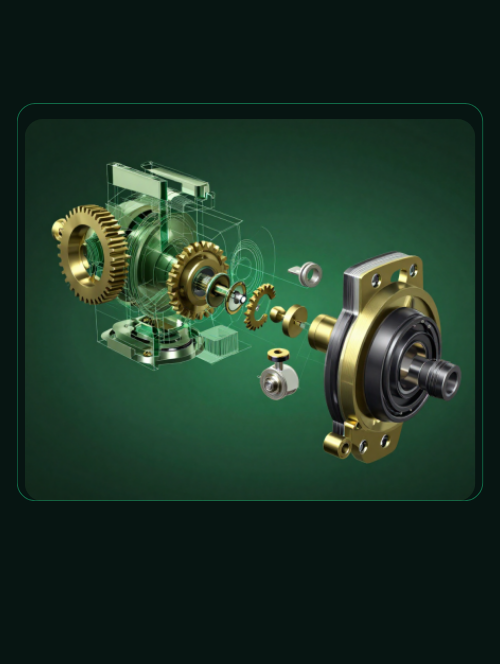
We develop mechanical components, assemblies and engineering documentation based on functional requirements, design constraints and manufacturing requirements.
Services include:
Deliverables
From Concept to Validated Product
We support new product development activities from initial requirements and concept development through detailed design, prototyping and design verification.
Our NPD support includes:
Requirement Analysis
Understanding functional, technical, performance and environmental requirements.
Concept Development
Developing and evaluating alternative design concepts based on technical and business requirements.
Detailed Design
Converting selected concepts into detailed mechanical components and assemblies.
Design Optimization
Improving performance, manufacturability, assembly and overall product efficiency.
Design Verification
Evaluating whether the developed design meets defined technical and functional requirements.
Prototype Development
Supporting prototype design, fabrication and evaluation before production.
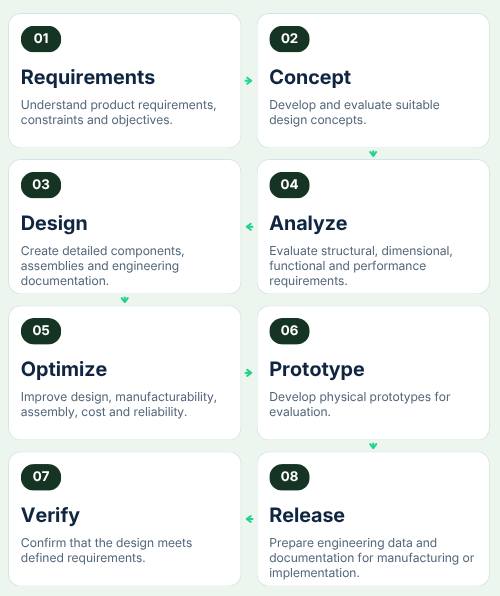
Typical NPD workflow
Requirement → Concept → Design → Analysis → Prototype → Verification → Release
Engineering Analysis for Confident Design Decisions
Engineering analysis helps identify potential design issues before physical production and testing.
Our analysis capabilities support design evaluation, optimization and technical decision-making.
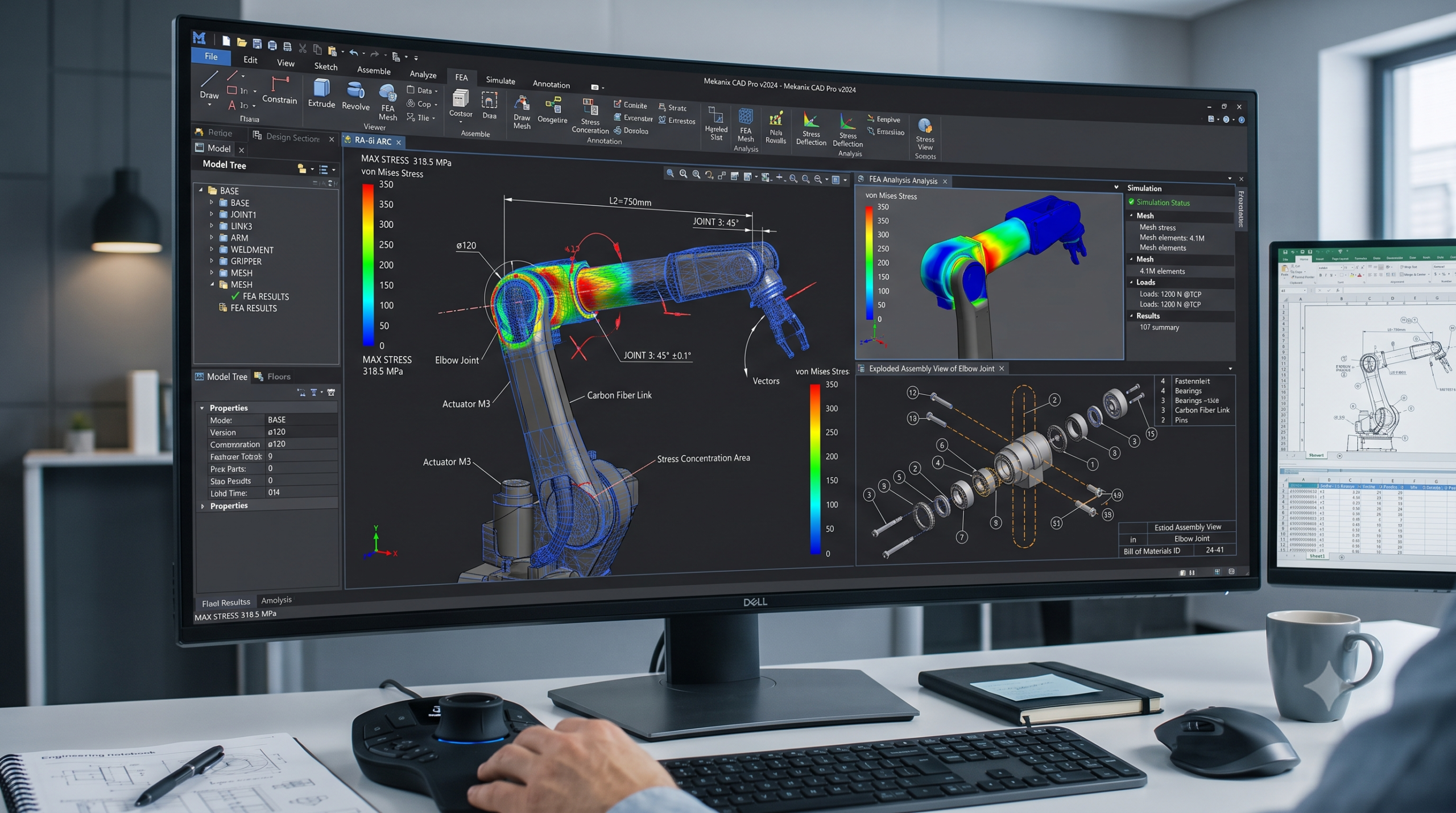
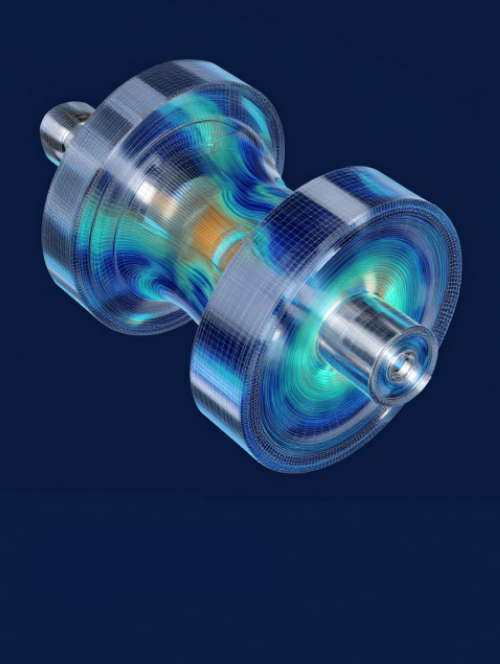
FEA — Finite Element Analysis
Evaluation of mechanical behavior under defined loading and boundary conditions.
Applications include:
CFD — Computational Fluid Dynamics
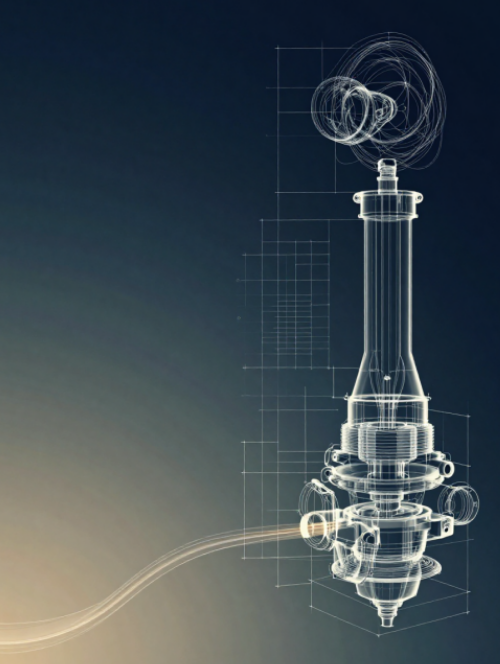
Analysis of fluid flow and thermal behavior for applicable engineering systems.
Tolerance Analysis
Evaluation of dimensional variation and its effect on product functionality and assembly.
Interface Analysis
Evaluation of mechanical interfaces between components and assemblies.
Design Evaluation
Technical assessment of existing or proposed designs against functional and engineering requirements.
Improving Products Throughout Their Lifecycle
Products often require engineering support long after their initial release.
Our sustenance engineering services help organizations maintain, improve and optimize existing products.
We support:
Our objective
Maintain → Improve → Optimize → Extend Product Life
From 3D Models to Controlled Engineering Documentation
Engineering documentation is an essential part of product development and manufacturing release.
We support:
Our documentation approach focuses on clarity, consistency, traceability and manufacturing usability.
Understand Existing Products. Discover Better Solutions.
We support organizations that need to understand, reproduce, improve or optimize existing mechanical products.
Reverse Engineering
Our reverse engineering approach can include:
Value Engineering / Value Analysis
We evaluate products from the perspective of function, performance and cost to identify opportunities for improvement.
Focus areas:
Key principle
Improve product value without compromising required function or performance.
Turning Designs into Physical Solutions
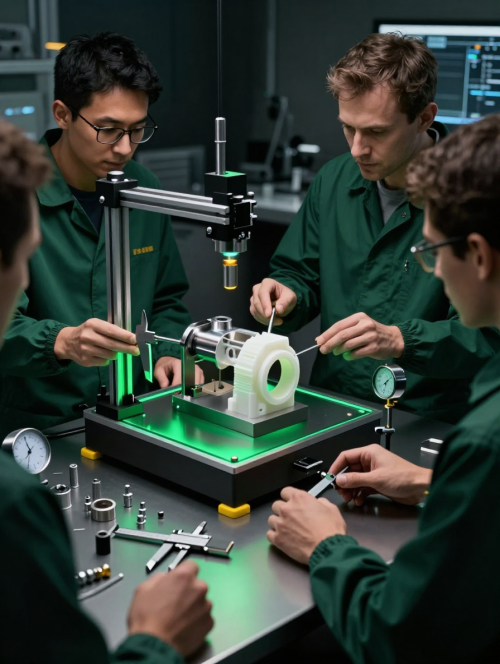
Prototyping allows engineering teams to evaluate form, fit, function and performance before production.
We support prototype development and engineering testing based on project requirements.
Prototyping support
Testing support
Development cycle
Design → Prototype → Test → Evaluate → Improve → Validate
Designing Beyond Geometry
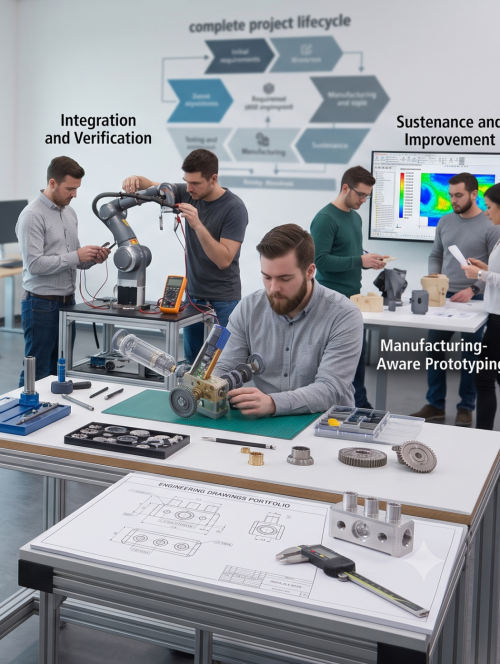
Our mechanical engineering approach considers the complete product lifecycle.
Function
Does the product perform its intended function?
Manufacturability
Can the design be manufactured consistently and economically?
Assembly
Can components be assembled efficiently and correctly?
Tolerances
Are dimensional requirements appropriate for functional performance?
Materials
Is the selected material suitable for the operating environment and application?
Reliability
Can the product perform consistently throughout its expected lifecycle?
Cost
Can the required functionality be achieved efficiently?
Serviceability
Can the product be maintained, repaired or replaced when required?
Design with Manufacturing in Mind
A good mechanical design must work not only in CAD but also in the real manufacturing environment.
Our engineering approach considers manufacturing processes such as:
Machining
Design considerations for CNC machining, turning, milling and related processes.
Sheet Metal
Bending, forming, thickness, bend allowances and manufacturability.
Casting
Draft, wall thickness, fillets and casting-related design considerations.
Injection Molding
Draft, wall thickness, ribs, bosses and molding considerations.
Assembly
Part accessibility, fastening, joining, assembly sequence and serviceability.
DFMA
Design for Manufacturing and Assembly principles to improve manufacturability and reduce unnecessary complexity.
From 3D Models to Controlled Engineering Documentation
Engineering documentation is an essential part of product development and manufacturing release.
We support:
Our documentation approach focuses on clarity, consistency, traceability and manufacturing usability.
A Structured Approach to Mechanical Product Development
CAD & Engineering Tools
Our mechanical engineering workflows can support industry-standard engineering environments.
CAD
Engineering
Engineering Data
Note: Only display specific software logos on the live website if your company actually provides services using those tools.
Flexible Engineering Engagement Models
Our mechanical engineering capabilities can be delivered according to the scope and maturity of your project.
Individual Engineering Tasks
Need support with a specific CAD, drawing, tolerance or engineering task?
We can support targeted requirements.
Project-Based Engineering
Need an engineering team for a defined project?
We can support specific project phases or complete engineering work packages.
Product Development Support
Developing a new product?
We can support the engineering lifecycle from concept through design, analysis, prototyping and verification.
Sustenance Support
Need ongoing engineering support for existing products?
We can support engineering changes, optimization and product improvements.
End-to-End Capability
Support across design, analysis, prototyping, verification and engineering documentation.
Manufacturing-Aware Design
Design decisions consider real-world manufacturing and assembly requirements.
Structured Engineering
A systematic approach to requirements, design, analysis, optimization and verification.
Flexible Engagement
Support for individual tasks, engineering work packages or complete projects.
Cross-Functional Expertise
Mechanical engineering can be integrated with electrical, embedded and software capabilities when projects require multidisciplinary development.
Lifecycle Support
Engineering support doesn’t have to stop at product release. We can support continuous improvement and sustenance activities.
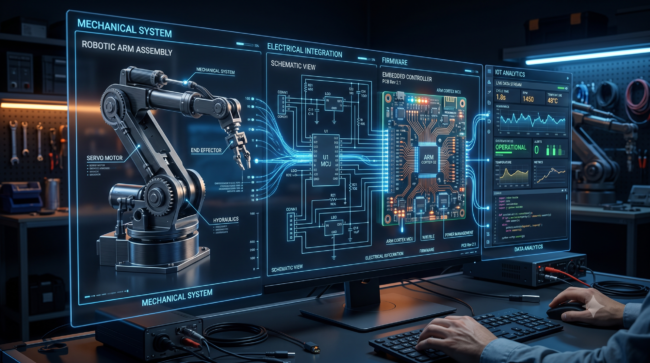
Modern products increasingly combine mechanical structures with electronics, embedded systems, software and connectivity.
Our multidisciplinary capabilities allow mechanical engineering activities to integrate with:
Mechanical – Product structure, components and assemblies
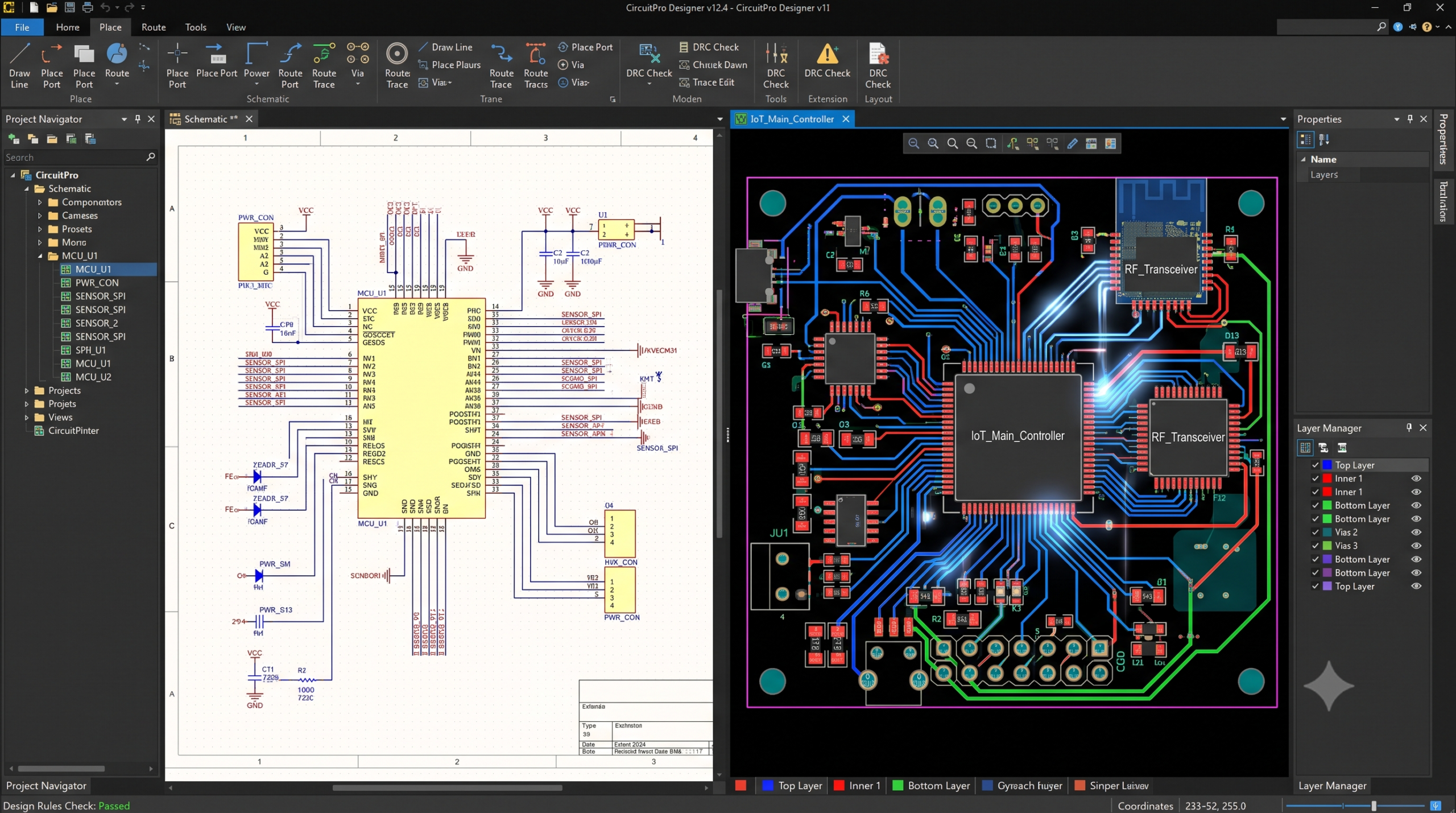
Electrical – Electrical systems and power electronics
Embedded – PCB, firmware and control systems
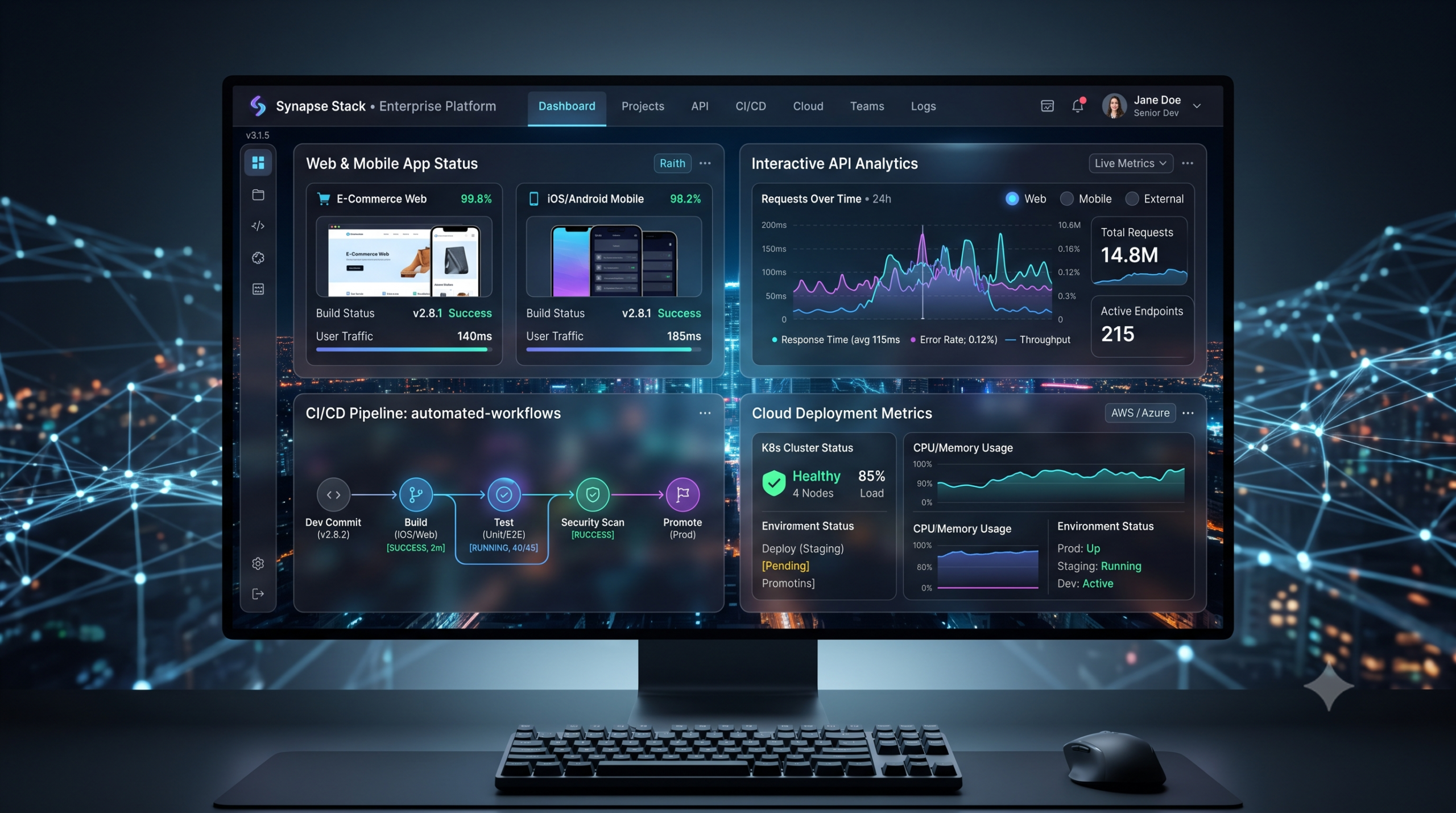
Software – Applications, dashboards and data systems
IoT – Connectivity, monitoring and remote data
Closing statement
When your project crosses engineering disciplines, our multidisciplinary capabilities can help bring the different technical elements together.

Our engineering capabilities can support a range of industrial and technology-driven applications.
Suggested industries:
Automotive
Industrial Equipment
Energy & Renewable Energy
Manufacturing
Electronics & Technology
Transportation
Healthcare & Medical Technology
Consumer Products
Automation & Machinery
Whether you are developing a new product, improving an existing design, solving a technical challenge or looking for additional engineering capacity, we can help.